
Minimum Payments: Why $90 Feels Right and Costs You Years
Paying the $90 minimum on a $3,000 card balance can take more than 12 years. See why the minimum feels right and what a steady payment saves.

Paying the $90 minimum on a $3,000 card balance can take more than 12 years. See why the minimum feels right and what a steady payment saves.

A few cents of interest a day can quietly cancel out your cash back. Learn how APR, daily rates and grace periods decide what your card costs.

A secured loan is backed by something you own, which protects the lender more than you. Compare the costs and the risks of secured and unsecured loans.
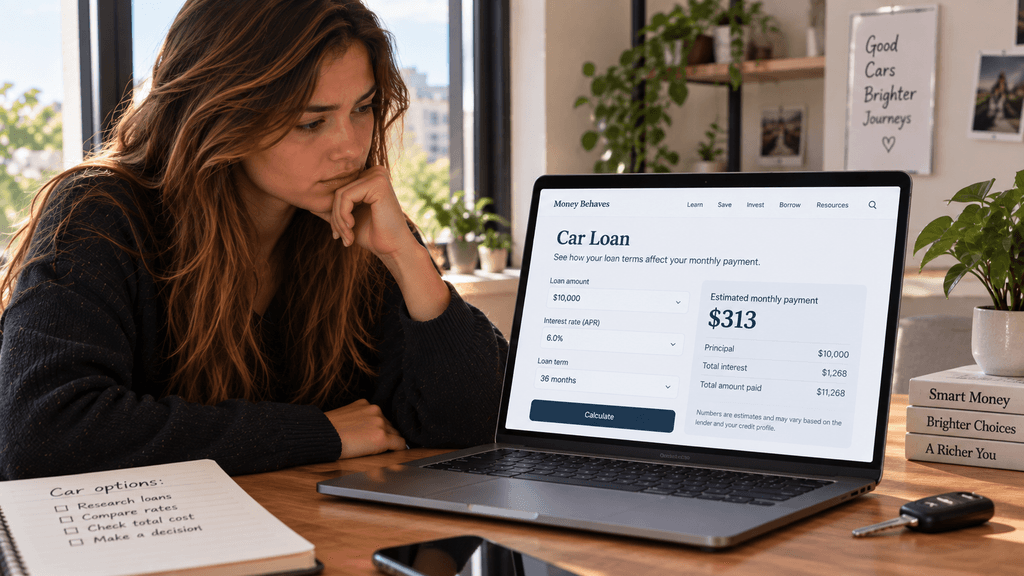
Every loan payment splits between principal and interest, and the split changes over time. See how loans really work with an interactive chart.

A 401(k), an IRA and a brokerage account each play a different role. Learn the 2026 limits, the employer match and which account to fund first.

Buying a fund is not the same as buying a company. Learn what you really own with stocks, bonds, mutual funds and ETFs, and why spreading out matters.

Saving protects money you will need soon, while investing grows money you can leave alone. Use real market history to decide which one fits each goal.

Your renters deductible is usually subtracted from the claim, not paid separately. See how it works with real examples and how to pick the right amount.

A personal loan usually charges less than a credit card, but not always. Compare real rates and a side-by-side example to see which costs more.

One payment can feel like less debt, even when it is not. Learn how a debt consolidation loan works, what it really costs and when it backfires.