
Tax-Loss Harvesting Before December 31: How It Works and the Wash-Sale Rule
A losing investment can still lower your tax bill. Learn how tax-loss harvesting works, the $3,000 limit and the wash-sale rule that can cancel it.
Investing can help your money grow over time, but it comes with risk, costs and a lot of confusing names. In this section, you will learn the difference between saving and investing, what you actually own when you buy an investment and how small fees can make a big difference over the years.
Start with Level 1, the basics. Read Saving vs. Investing first, then learn what you own with stocks, bonds, mutual funds and ETFs and the difference between a 401(k), an IRA and a brokerage account.
Then move on to Level 2, where we compare options. See the practical differences between ETFs and index mutual funds, learn how target-date funds work and find out what a 0.05% vs. 0.50% fee really costs over time.
We also explain why percentages that look tiny are easy to ignore, and why that can cost more than people expect. Remember that all investments can lose value, and our lessons are education, not investment advice.
A losing investment can still lower your tax bill. Learn how tax-loss harvesting works, the $3,000 limit and the wash-sale rule that can cancel it.

Pay taxes now or later? Roth and traditional IRAs reward different situations. See the 2026 limits, the real math and why today’s tax break feels bigger.
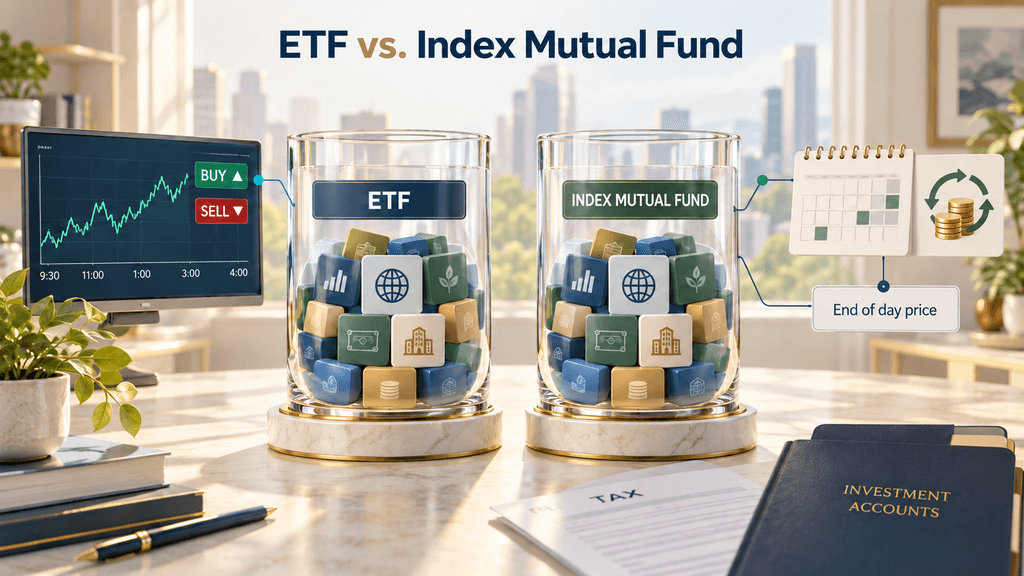
Two funds can track the same S&P 500 index and still cost you different amounts. Learn the differences between ETFs and index mutual funds that actually matter.

A 401(k), an IRA and a brokerage account each play a different role. Learn the 2026 limits, the employer match and which account to fund first.
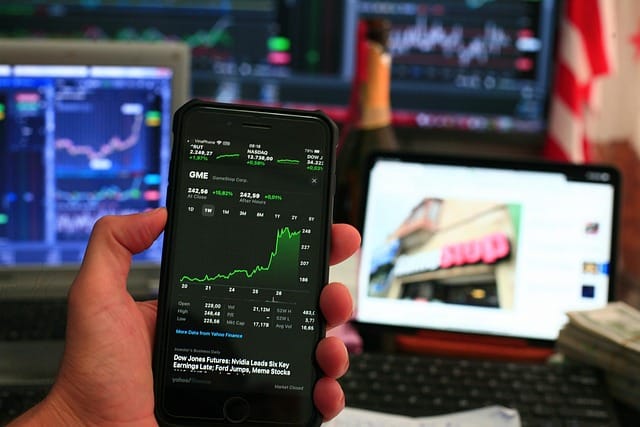
Buying a fund is not the same as buying a company. Learn what you really own with stocks, bonds, mutual funds and ETFs, and why spreading out matters.

Saving protects money you will need soon, while investing grows money you can leave alone. Use real market history to decide which one fits each goal.

A 0.05% fee and a 0.50% fee both look tiny, yet the gap can grow to thousands of dollars. See what expense ratios really cost over time.
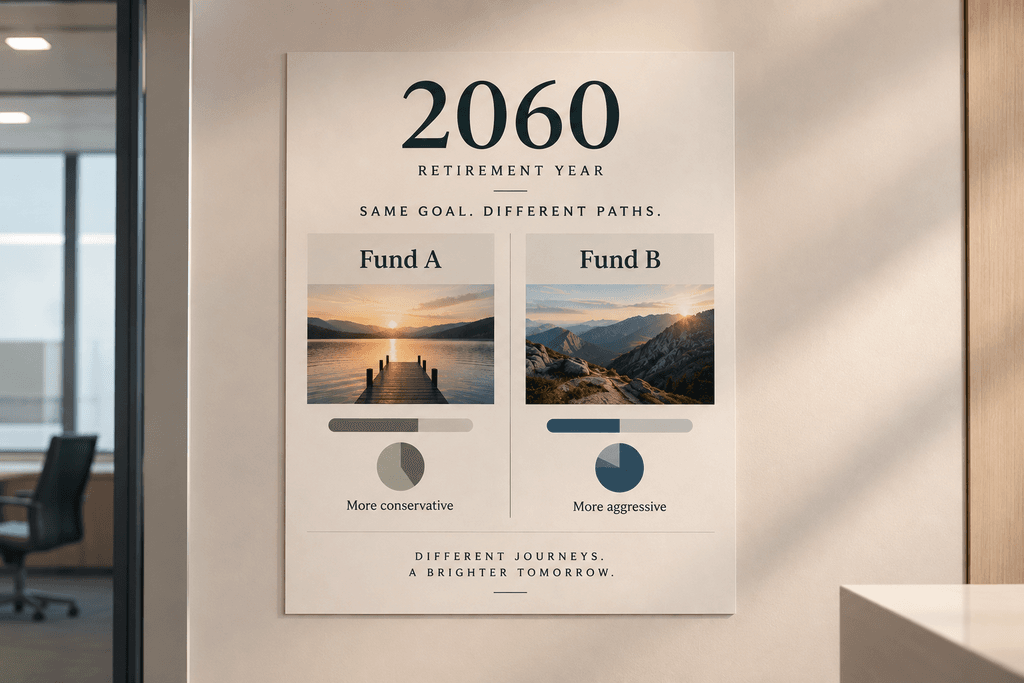
A target-date fund picks your mix of stocks and bonds and changes it as you age. Learn how glide paths work, what they cost and the risks to watch.